Checking in with the Southern California bird scene, two locales yielded an assortment of species.
First up, an estuary on the coast.
During a recent visit to the Malibu Lagoon with the Santa Monica Bay chapter of the National Audubon Society, several familiar bird species caught my attention for their plumage and bill displays.
These Snowy Egrets were patiently waiting for a school of fish to swim close enough for a meal. They were being helped by a duo of Red-Breasted Mergansers (see one in the bottom of the picture) who were feverishly driving the fish toward the channel of Malibu Creek, away from the egrets.
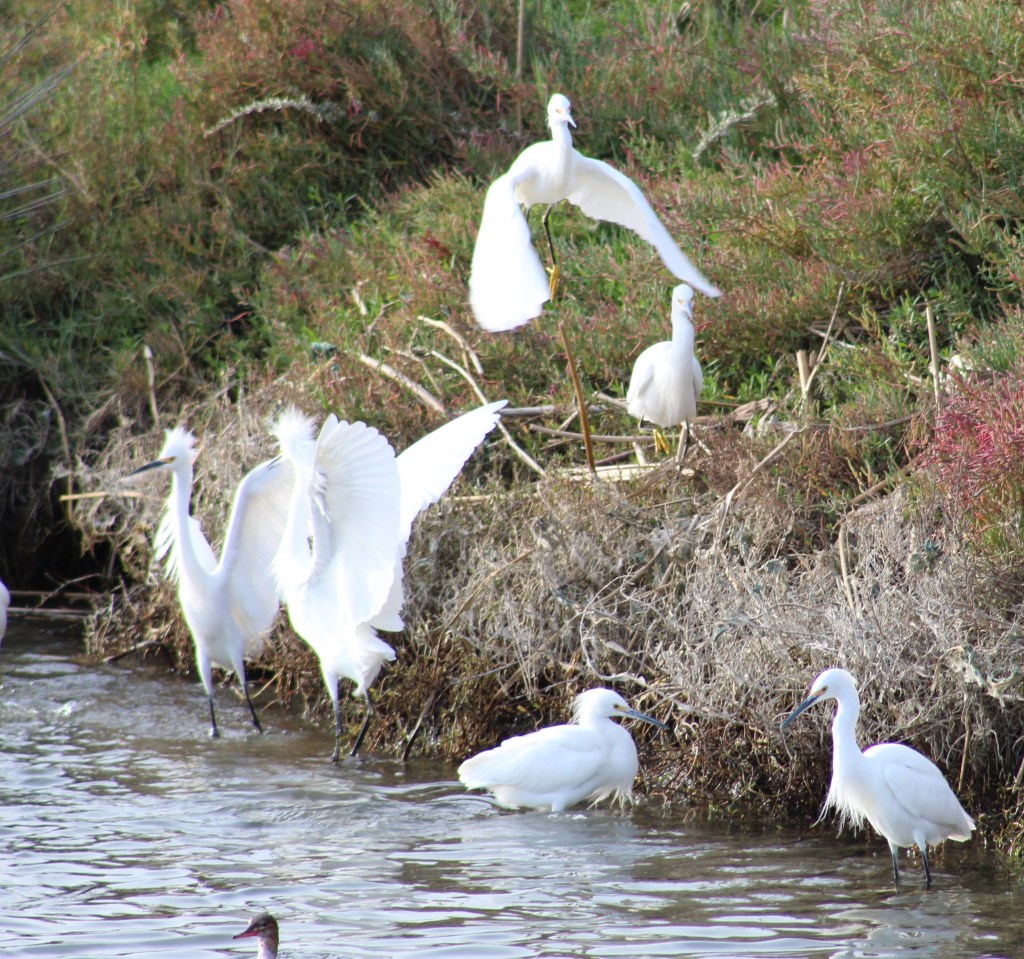
The Snowy has a black bill and is smaller than the Great Egret. Snowy’s feet are yellow and have a wingspan of about 40 inches (100 cm). I marvel at how they keep their feathers so bright when they’re standing and fishing in muddy waters.

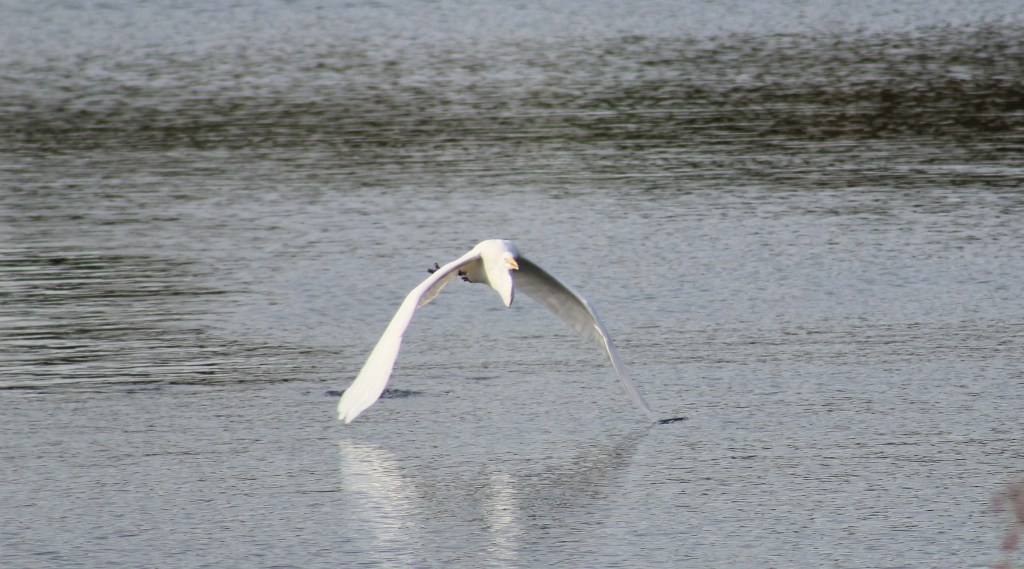
The Great Egret featured here reminds us of its role in the creation of the National Audubon Society. In the late 1800’s, egrets were routinely slaughtered for their feathers which were used to adorn ladies’ hats. Massachusetts was the first state to establish an Audubon Society in 1896. Soon after, the national Christmas bird hunts were turned into Christmas Bird Counts, and in 1905, the National Audubon Society was established. Today, the Great Egret is the symbol for the National Audubon Society. Their wingspan is 51-57 inches (131-145 centimeters). The bill is yellow-orange, and their legs are black. In flight, they tuck their neck in and dangle their slim vermicelli legs behind, horizontal to the earth.
Two Red-Breasted Mergansers were seen in the brackish waters at the Lagoon, likely drawn in by the high tide earlier that morning. By sheer luck, I captured the serrated and hooked bill in a photograph. Also known as a sawbill, as the bill’s edges keep slippery fish from escaping, these birds migrate from their summer nesting grounds in boreal forests in Northern Canada and Alaska to the temperate saltwater edges of North America in winter. Their colorful breeding plumage is not visible in this silhouette-like image.

Closer to home, and by far the most colorful bird seen in the last month is this Bullock’s Oriole. Filmed here by my wingman, it is a new visitor to our birdbath. We don’t know if it’s a resident who recently discovered our saucers of water or if it’s a winter visitor from the Western United States. Either way, it’s a wonderful addition to our outdoor menagerie!
What’s happening in your neck of the woods?
 Mashabu
oh beautiful, Marsha – thanks and love
LikeLike