Our Mojave Sage is blooming for the first time. As the name suggests, its range is a little northeast of us, and for that reason, I wasn’t sure it would thrive in this chaparral microclimate. This is one of several native plants purchased last autumn in an attempt to provide local insects and birds with host plants that are familiar. Our garden is a small urban patio, but I like to think we can do our bit to support the ecosystem as it was before the arrival of the orange groves, the aerospace companies and the ranchos.

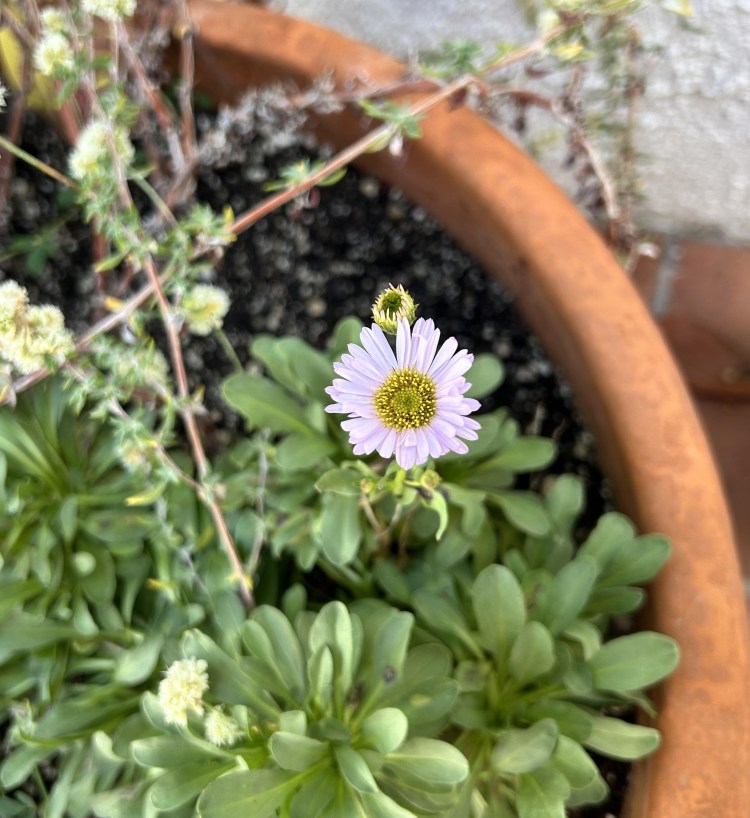
Also blooming this week is the Leaf Daisy. It reminds me of the six feet tall New England Asters that grew in Minnesota and bloomed in late summer. This blossom is about twice the diameter of its New England counterpart but is quite petite in stature—maybe eight or ten inches high at most. Is it coincidence or design that both blooming flowers’ petals are purple?
A Baja California Tree Frog found a quiet spot on our patio table to ride out the hottest part of the day: at the foot of a pottery jug of sunflowers. This frog is about an inch long and its colors are subdued compared to previous sightings of the species on the edge of Santa Ynez Creek which were a vibrant kelly green. A neighborhood squirrel has sampled the petals of the flowers, and scampered away with remnants from two coneheads. What remains are denuded flowers, but I sense the frog doesn’t mind.

At the Malibu Lagoon, I spotted this Turkey Vulture and then the decaying carcass of a sea lion, bloated and discolored. Looking carefully at the head of this raptor, I see no feathers. As vultures use their curved beaks to tear into carrion, a featherless head is a plus for keeping tidy. They have an exceptional sense of smell, helpful in locating their next meal. While volunteering in the Education Program at the University of Minnesota’s Raptor Center, I learned that ranchers who have natural gas lines on their property know there’s a leak to report in the pipe when vultures gather on the ground nearby: they are attracted to the sulfur “rotten eggs” smell that is added to natural gas for safe detection of the otherwise odorless gas.

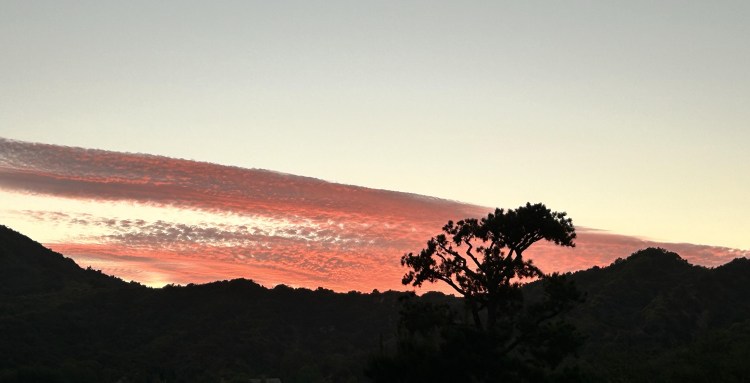
We recently saw this cloud make a colorful appearance on the ridgeline of the mountains in Topanga State Park at sunset.
 Mashabu