
The Palisades Fire broke out on January 7 around 10:30 a.m. Following a three-week evacuation, we’ve been residing in a foreign neighborhood of ricocheting emotions and heightened attention.

Among the emotions are shock at the degree to which the fire destroyed the Pacific Palisades and Malibu; gratitude that our place did not burn; and a strange guilt that we survived with only ash and smoke to contend with.
A heavy dose of denial is necessary to stay in a fire-damaged neighborhood surrounded by a state park with only one paved road leading out and a fire road that remains locked and inaccessible even during disasters. The non-stop television coverage is over and the media’s gaze has turned elsewhere. For those of us who live here, a measure of post-traumatic stress disorder is present. Every time the north winds kick up, or a helicopter flies overhead, or a siren blares, brows furrow. Anxiety levels increase.
We now greet each arrival of the once-familiar as a milestone. But first we had to shed the public safety protocols which were part of the re-population program. Gone are the California Highway Patrol escorts into the neighborhoods. The American Red Cross Volunteers have dispersed. There are fewer National Guard checkpoints now. World Central Kitchen has served thousands of meals, including at our neighborhood’s former Italian restaurant, and has packed up for the next crisis. The newspapers are being thrown once more, delivery trucks are allowed in and our water is now drinkable. The neighborhood’s sole surviving grocery store has graduated from generator-provided power and is now open from six a.m. to five p.m. Children are nowhere to be seen, as their schools have burned, and the air quality has been iffy.
When we’ve met neighbors, we exchange stories. One neighbor evacuated to a home where Mel Brooks was also staying, offering comfort in a time of unimaginable stress. A lady well into her eighties, whom we met at the hotel in Santa Monica where we evacuated, lost everything except her clothes and her car. Unable to go to her hotel room, she sat in shock in the lobby for three days until heading up the coast to start a new life. Our mailman, Mathew, had the grim task of listing all the properties on his route which would not receive any more mail until the dwellings were rebuilt.
A friend of mine lost her husband and her home in the fire. Several women I knit with in Malibu lost their homes—many of them are retired, some widowed and all unsure about the calculus of rebuilding.
Families dressed in white hazmat suits and breathing masks show up occasionally, trying to process the destruction of their homes and neighborhoods. Samaritan’s Purse volunteers help residents sift through ashes, looking for treasures that survived the fire. All day, every day, hundreds of dump trucks trundle through the neighborhood and along PCH, taking the ash-strewn debris to landfills in Southern California and Nevada.

We’ve been home since January 27. The teeming hums of a vibrant neighborhood in a subdivision of Los Angeles have changed. In our lifetimes, things will not return to anything approaching normal.
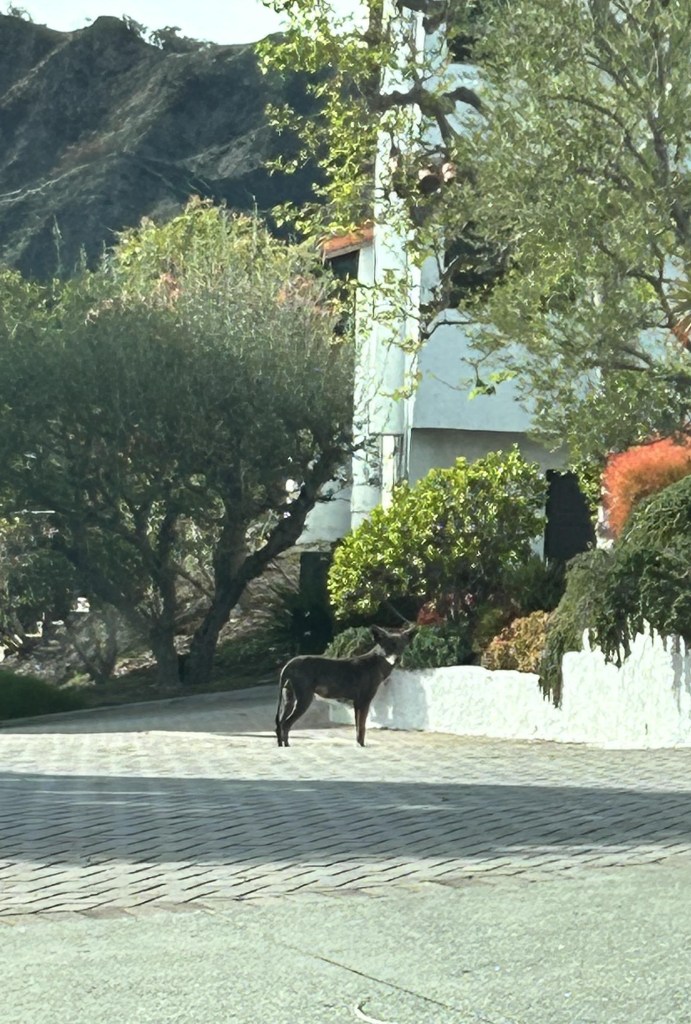
In the face of this change, nature is irrepressible. Coyotes are wandering the Highlands in daylight.
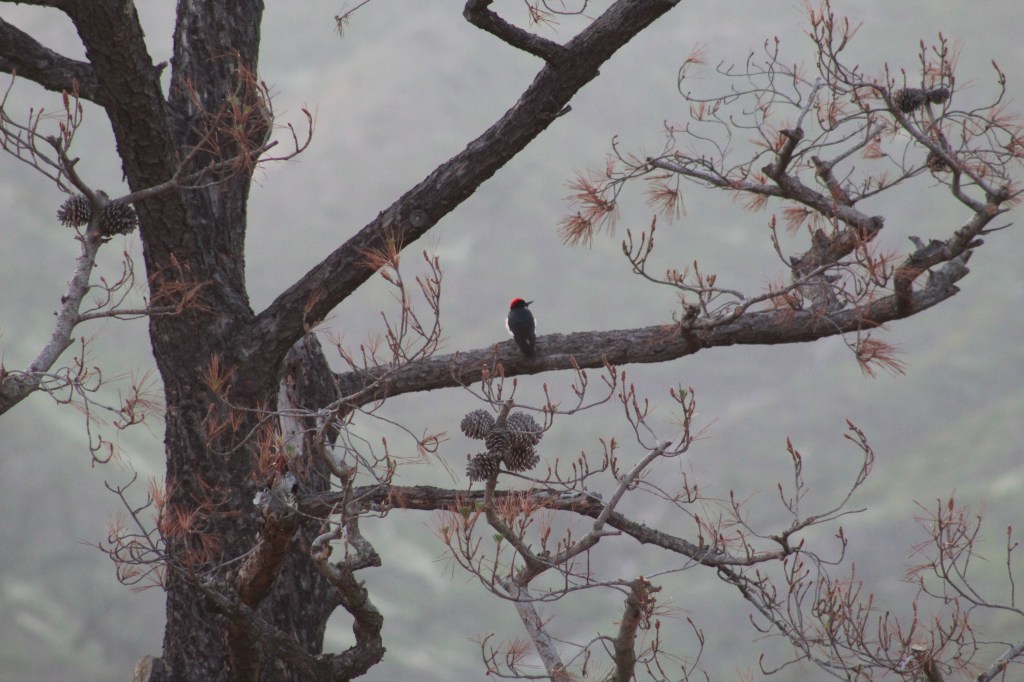
Acorn Woodpeckers are finding new perches in the burned pine tree.
Great Horned Owls still call from dusk to dawn.
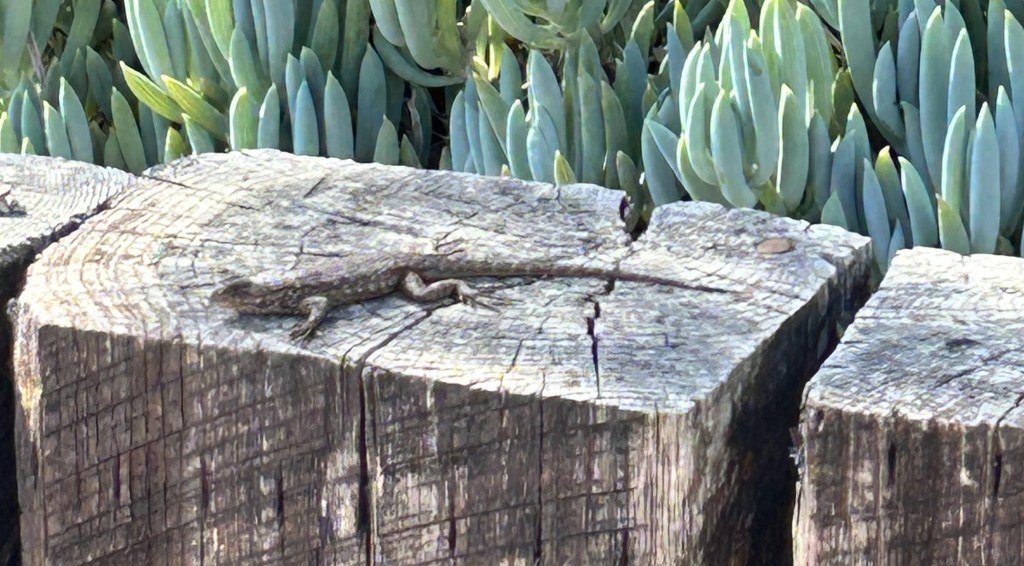
Western Fence Lizards have new babies scampering around the plants.
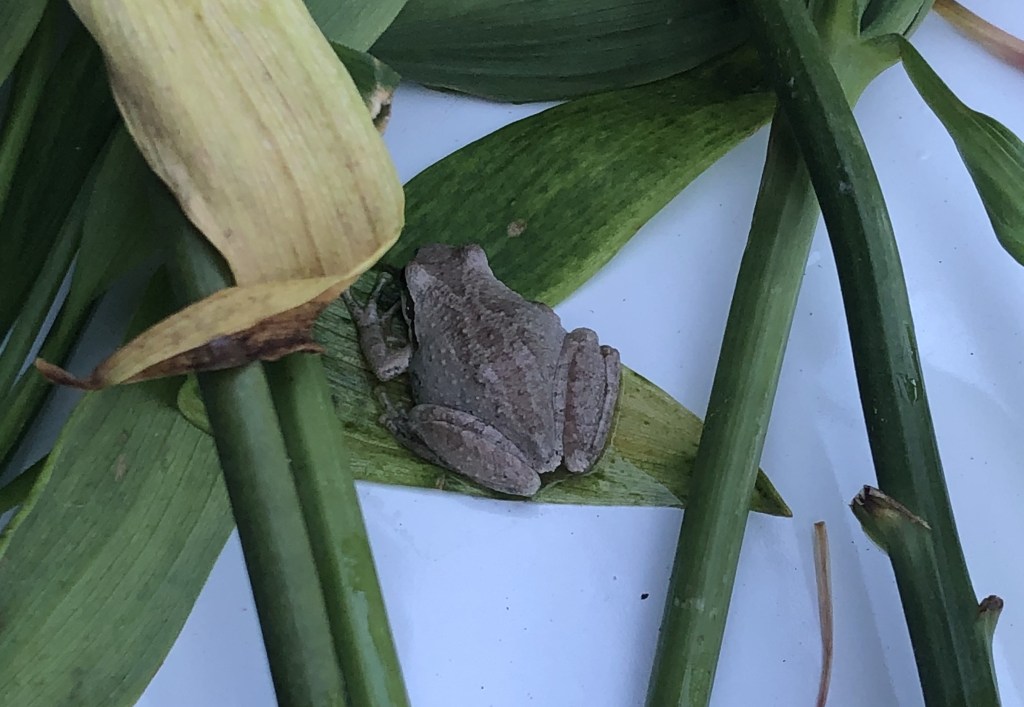
Our Baja California Tree Frogs are visible in the flower vases and audible at night.
Click here to listen to the frog’s chorus on April 13, 2025.
And down at the beach the By-the-Wind Sailors have washed up by the dozens.
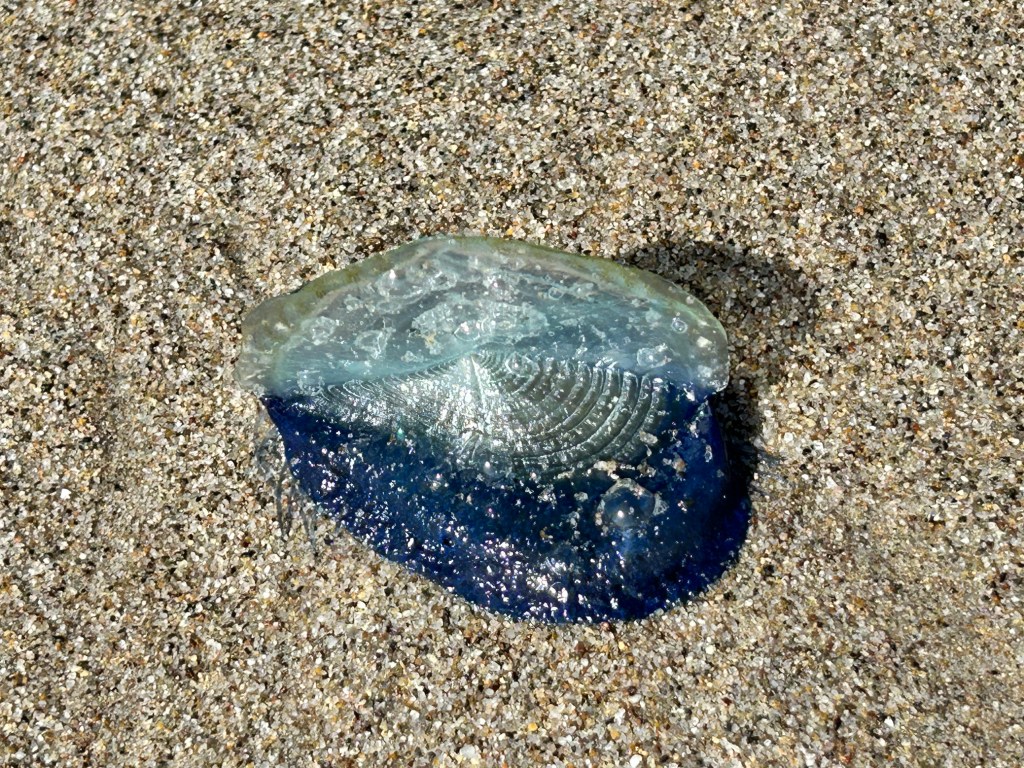

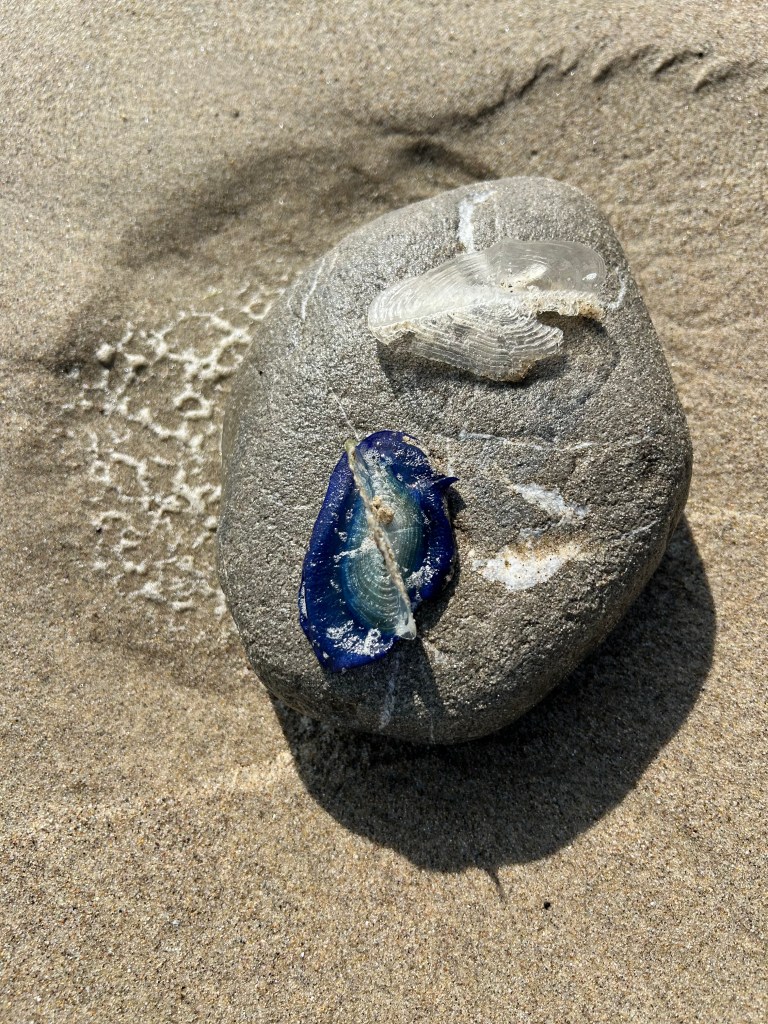
Living adjacent to Topanga State Park, we are reminded that nature still has capacity to recover. At the beach on Santa Monica Bay, we see the Pacific Ocean gradually return to her familiar blue hues. With a hat tip to David Hockney, nature cannot be cancelled.
 Mashabu